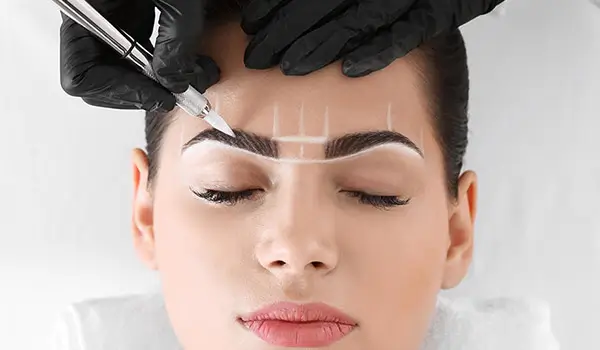
Professional brow training teaches far more than shaping alone. Students study facial proportion, skin response, sanitation, and hand control in a setting built around close observation. Each lesson turns a visual judgment into a repeatable method, which helps beginners work with greater precision. Since brows influence expression so strongly, even slight changes can shift the balance across the face. Solid, comprehensive education gives new artists a safer, calmer way to build dependable habits.
Brow Mapping Basics
Most programs begin with brow mapping, as proportion guides every service that follows. During an eyebrows course, students usually mark the inner start, highest point, and tail using facial landmarks, string, or pencil guides. This practice builds visual consistency across different bone structures. Clear mapping also lowers the chance of over-removal, which can leave sparse areas that take weeks to refill.
Shape Analysis
Before wax or tint touches the skin, students learn to assess brow density, growth direction, and front bone structure. This review helps them choose a shape that supports natural expression rather than forcing a trend. Instructors often caution against aggressive thinning. Small refinements usually age better, preserve fullness, and reduce the risk of creating visual imbalance across the upper face.
Wax Control
Wax training centres on temperature, placement, pressure, and removal angle. These details affect comfort, skin integrity, and edge cleanliness. Students practice working in small sections, which makes the arch easier to control and limits accidental lifting near delicate areas. Post-wax care is taught with equal seriousness. Cooling gel, residue removal, and skin checks help reduce redness, surface irritation, and client concern after treatment.
Tint Selection
Colour lessons focus on matching pigment depth with hair tone, skin undertone, and desired finish. A good result depends less on darkness than on restraint. Students learn how oxidation changes final shade, why timing matters, and how to prevent uneven staining near dry patches. That knowledge is useful for sparse brows, where colour can create the appearance of more structure without a heavy cosmetic look.
Hybrid Dye Practice
-
Longer-Lasting Colour
Many courses include hybrid dye, which colours both brow hair and the outer skin layer. Students practice mixing ratios, brush pressure, border control, and removal timing so the stain develops evenly. When handled well, hybrid formulas can add visible density where natural growth appears scattered. That makes the service helpful for clients seeking a stronger definition, while still keeping the overall pattern soft and believable.
Lamination Technique
-
Direction and Hold
Lamination training teaches students how to redirect brow hairs with control, rather than forcing a rigid finish. They study processing times, strand behaviour, and the signs of overexposure, such as dryness or loss of elasticity. Courses also cover neutralising and conditioning steps. This sequence matters because the goal is to lift with flexibility, not a flattened texture that looks brittle or feels stressed.
Trimming and Detailing
Trimming requires restraint, and good instructors treat it that way. Students first brush the hair into the resting position, then isolate the true excess length before making any cuts. This approach protects density and avoids the hollow gaps caused by rushed snipping. Detailing often includes careful tweezing after other steps are complete. Used sparingly, those finishing touches sharpen the outline without creating a severe or artificial edge.
Sanitation Standards
Sanitation is taught as a clinical routine, not a background chore. Students review hand hygiene, tool disinfection, workstation setup, disposable use, and safe storage for products that contact skin. Patch testing is usually included, along with basic contraindications like active irritation or recent exfoliating treatments. These habits reduce cross-contact risk and support safer decision-making for clients whose skin barrier may already be compromised.
Consultation Skills
Strong brow work begins with a careful consultation. Students learn to ask about skin sensitivity, current medications, previous reactions, home grooming habits, and the results a client expects. This conversation shapes service choice and helps prevent avoidable problems. Instructors also stress plain, accurate language. Clear guidance makes aftercare easier to follow and lowers the risk of confusion once the client leaves the chair.
Timing and Workflow
Courses also teach all about timing because technical skill means little without orderly service flow. Students practice arranging tools, tracking processing windows, and moving from assessment to finish without wasted motion. This rhythm becomes useful during busy schedules, when distraction can lead to uneven application or delayed removal. A steady sequence supports cleaner results and helps newer artists stay composed under the pressure of close facial work.
Conclusion
Professional brow courses train the eye, the hands, and the judgment required for safe cosmetic services. Students leave with a working method for mapping, shaping, colouring, sanitation, and client communication, rather than a loose set of disconnected tricks. That difference matters in daily practice. Consistent instruction helps new artists protect skin, preserve natural hair, and create balanced brows that suit the face in front of them.