Testosterone plays a significant role during transition. It initiates new hair growth in androgenic areas, alters existing texture and density, and shifts overall body hair distribution over time. What it does not do is eliminate hair that was already established before or during the early transition. For trans men with specific removal goals, that distinction matters practically.
A permanent hair removal solution addresses what testosterone leaves behind, and electrolysis does so regardless of how HRT has affected surrounding follicles.
What Testosterone Does and Doesn’t Do to Existing Follicles
Testosterone drives follicle activation in androgen-sensitive areas. It converts fine vellus hairs to coarser terminal hairs and can increase density across the body and face over months and years of HRT.
What it cannot do is reverse follicles that were already producing hair before the transition began. Once a follicle is active and producing terminal hair, it remains so. Testosterone does not deactivate established follicles, and there is no hormonal pathway that causes existing unwanted hair to shed permanently.
This is a straightforward biological limit, not a treatment gap. It simply means that removal goals requiring permanent clearance need a direct follicular approach.
Which Areas Do Trans Men Commonly Seek Removal For
Goals vary significantly between individuals, but common areas include:
- Pre-existing facial hair patterns that don’t align with presentation goals, particularly around the cheeks, neck, or specific zones where density feels uneven
- Chest hair asymmetry or density in areas that feel inconsistent with body image
- Unwanted hair on the abdomen, lower back, or shoulders where testosterone has increased growth beyond what feels comfortable
- Areas where ingrown hairs or irritation have become a persistent issue due to texture changes during HRT
Each of these concerns has a practical solution. Electrolysis treats each follicle individually, permanently disabling it regardless of what testosterone is doing to adjacent follicles.
Why Laser Is Often an Unsuitable Fit
Laser hair removal depends on the melanin contrast between the hair and the surrounding skin. During the testosterone-driven transition, several factors reduce its reliability:
- Skin tone can shift and deepen over time, altering the contrast the laser requires
- Hair colour variation across treatment areas affects how consistently laser energy is absorbed
- Fine or light hairs that developed before or during early transition often fall below the threshold laser can effectively target
- Laser is classified as permanent hair reduction, not permanent removal, meaning complete clearance is not guaranteed
For trans men with mixed hair colours, changing skin, or specific clearance goals, these limitations make laser an unreliable primary method.
How Treatment Planning Works Alongside HRT
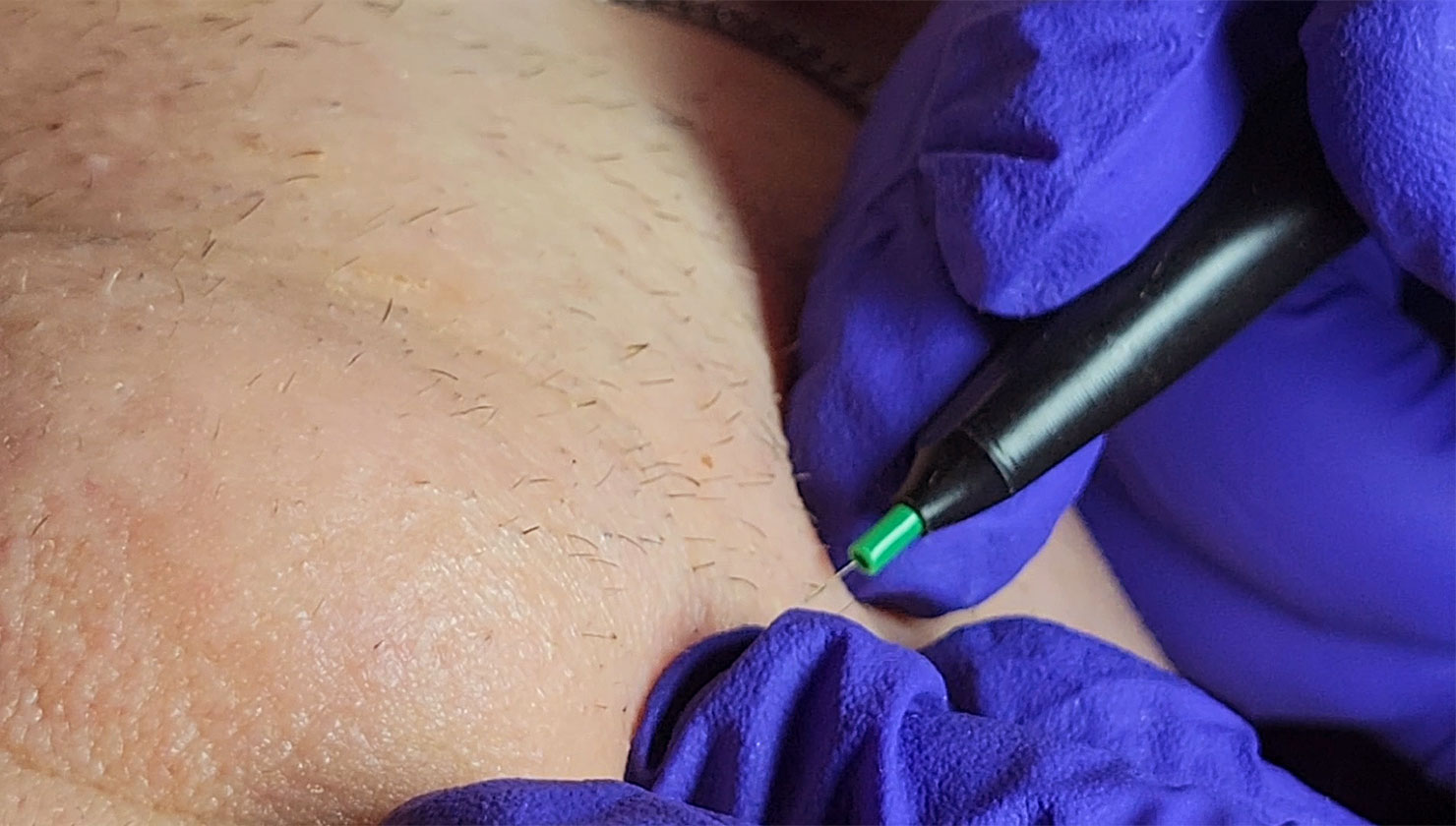
First, what is electrolysis? Electrolysis works by inserting an ultrafine probe into the base of the hair follicle, where a small electrical charge triggers a chemical reaction that destroys the stem cells responsible for hair growth
Electrolysis can proceed during active HRT without interruption to either. The treatment works at the follicle level and is not affected by circulating hormone levels. Sessions can be scheduled around other appointments and adjusted as life circumstances change.
A few practical points worth noting:
- Testosterone can continue activating new follicles in some areas during the early years of HRT. Electrolysis permanently disables treated follicles, but newly activated ones in adjacent areas may require attention over time
- Treatment timelines depend on the surface area involved, hair density, and individual growth cycles
- Multiple sessions are required because hair grows at different times within its natural growth cycles. Progress is visible across consecutive sessions as density reduces
According to the WPATH Standards of Care Version 8, hair removal is recognised as a component of gender-affirming care, and treatment planning should take into account the individual’s transition stage and goals.
During treatment, mild tingling or stinging may occur. Temporary redness afterwards is common and typically resolves within a few hours with appropriate aftercare.
Realistic Timelines
Smaller areas, such as the neck or cheek zones, may reach clearance within 12 to 18 months with consistent sessions. Larger areas or higher-density zones typically require longer. Beginning treatment with a clear map of priority areas helps structure sessions efficiently and makes progress easier to track.
Moving Forward
Unwanted hair that testosterone hasn’t resolved is not a complication of transition. It is simply a biological reality that a direct follicular approach can address permanently.
A consultation with a qualified electrologist can provide a realistic treatment plan built around individual goals, current HRT stage, and practical scheduling.
Clearance is achievable with the right approach and consistent sessions.